Eustachian Tube Dysfunction: Symptoms, Causes & Treatment | Michigan Nose & Sinus Health
Eustachian tube dysfunction: symptoms, causes, and treatment options
Your ears feel clogged. You swallow, yawn, pinch your nose and blow — and nothing changes. That stuck, full feeling just won't go away.
If this sounds familiar, you're likely dealing with eustachian tube dysfunction, or ETD. It's one of the most common ear complaints that ENT doctors evaluate, and it affects roughly 1% of adults at any given time. Temporary episodes tied to colds and allergies are even more common than that.
The good news: ETD is very treatable. For some people, simple home remedies do the job. For others, newer in-office procedures like eustachian tube balloon dilation can provide lasting relief in under 20 minutes.
This article covers what the eustachian tube actually does, why it stops working, how to tell ETD apart from other ear problems, and the full range of treatment options available at Michigan Nose & Sinus Health.
What is the eustachian tube and what does it do?
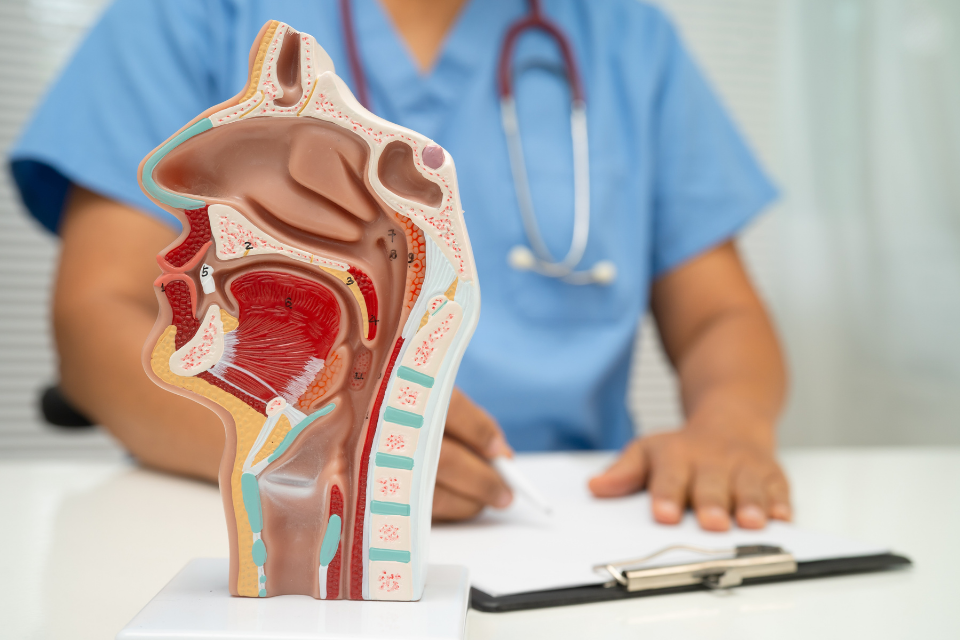
The eustachian tube is a small passageway that connects your middle ear to the back of your nose and throat (an area called the nasopharynx). You have one on each side.
Every time you swallow, yawn, or chew, these tubes open briefly to do three things: equalize air pressure on both sides of the eardrum, drain any fluid that collects in the middle ear, and act as a barrier against sounds and bacteria traveling up from the throat.
When your eustachian tubes are working normally, you never think about them. The whole process happens automatically, dozens of times a day, without you noticing.
But when a blocked eustachian tube can't open or close the way it should, pressure builds up in the middle ear, fluid can get trapped, and symptoms start to stack up. That's when the problem has a name — and when it's time to figure out what's causing it.
Eustachian tube dysfunction symptoms: how to know if you have it
The most common sign of ETD is a feeling of fullness or pressure in one or both ears that won't go away. Your ears feel clogged and muffled, almost like you're underwater or stuck at altitude. Swallowing and yawning may help briefly, but the pressure comes right back.
Other symptoms to watch for include popping, clicking, or crackling sounds when you swallow, ear pain that ranges from a dull ache to sharper discomfort, ringing in the ears (tinnitus), and mild dizziness or feeling off-balance. Many people notice that symptoms get worse with altitude changes — flying, driving through mountains, or even riding an elevator.
When symptoms point to something more serious
Most ETD is uncomfortable but not dangerous. However, you should see an ENT promptly if your symptoms last more than two weeks, you notice significant hearing loss, you have discharge from the ear, or you develop severe pain or fever. These can signal an infection or another condition that needs a different treatment approach.
What causes eustachian tube dysfunction?
ETD happens when something prevents the eustachian tube from opening or closing properly. In most cases, that something is swelling or congestion in the tissue surrounding the tube opening.
Allergies are one of the most frequent culprits. Seasonal and environmental allergens inflame the nasal and throat lining, which narrows or blocks the tube. Upper respiratory infections — common colds, flu, sinus infections — do the same thing through mucus buildup and inflammation. Chronic sinusitis can keep the eustachian tubes irritated for weeks or months at a time. Acid reflux, specifically laryngopharyngeal reflux (LPR), can also swell the tissue around the tube opening when stomach acid reaches the nasopharynx.
Structural and lifestyle factors
Some people are simply built with narrower or floppier eustachian tubes. Enlarged adenoids (more common in children but sometimes an issue in adults), nasal polyps, and a deviated septum can all interfere with drainage and tube function.
Smoking and secondhand smoke irritate and inflame the tube lining over time. Rapid altitude changes from flying or scuba diving can overwhelm the tube's ability to equalize pressure. And if you live in Michigan, you already know that big swings in barometric pressure can trigger flare-ups seemingly out of nowhere.
In many cases, multiple eustachian tube dysfunction causes overlap. Identifying the root cause — or combination of causes — is what determines which treatment will actually work.
ETD vs. other ear conditions: how to tell the difference
Ear pressure and muffled hearing don't always mean ETD. Several other conditions produce similar symptoms, and mixing them up can lead you down the wrong treatment path.
ETD vs. ear infection (otitis media): ETD typically causes pressure and fullness without fever or severe pain, and it often affects both ears. An ear infection brings acute pain, sometimes fever, and usually hits one ear. Ear infections are also far more common in children, and they tend to follow a cold. ETD can exist alongside an ear infection — in fact, the connection between sinus inflammation and ear infections is well established — but the two aren't the same condition.
ETD vs. earwax blockage: With ETD, swallowing or yawning may briefly shift the pressure, and hearing tends to fluctuate. Earwax blockage causes constant muffled hearing that doesn't change with swallowing, and it's usually visible on exam.
ETD vs. TMJ disorder: ETD symptoms worsen with colds, allergies, or altitude changes. TMJ-related ear pain and clicking are tied to jaw movement, chewing, or clenching.
An ENT evaluation can sort these out quickly and point you toward the right treatment.
Home remedies and conservative treatments for ETD
Mild or short-term ETD often clears up on its own with a little help. These conservative measures are typically the first step before considering anything more involved.
Simple self-care techniques can make a real difference. The Valsalva maneuver — gently blowing with your nose pinched and mouth closed — can sometimes force the tube open enough to equalize pressure. Swallowing, yawning, and chewing gum all encourage the tube to open naturally. Nasal saline irrigation helps flush out congestion and reduce swelling around the tube opening.
Over-the-counter decongestant nasal sprays can provide short-term relief, but limit use to three days to avoid rebound congestion. Oral decongestants and antihistamines also help, especially when allergies are driving the problem.
When OTC options aren't enough, prescription nasal corticosteroid sprays like fluticasone or mometasone can reduce inflammation around the eustachian tube over time. Your doctor may also recommend allergy management through immunotherapy or prescription antihistamines. If acid reflux is a contributing factor, treating the underlying LPR can improve ETD symptoms as well.
If your symptoms persist beyond four to six weeks despite these measures, it's time to see an ENT for a closer look.
When to see an ENT for eustachian tube dysfunction
Conservative treatments work well for many people, but they have their limits. It's time to schedule an evaluation with an eustachian tube dysfunction ENT specialist if your symptoms have lasted longer than six weeks, you're dealing with recurring episodes multiple times a year, hearing loss isn't resolving, or ETD is affecting your sleep, work, or daily life.
At your visit, Dr. Ulrich will perform a full ear, nose, and throat exam along with a hearing test (audiogram) and tympanometry, which measures eardrum movement and middle ear pressure. A nasal endoscopy may also be used to look directly at the eustachian tube opening and rule out structural issues like polyps or a deviated septum.
These tests take the guesswork out of diagnosis. And if your ETD isn't responding to medications, several procedural options can provide lasting relief.
Procedural and surgical treatment options for ETD
When medications and home remedies fall short, your ENT can treat the underlying cause of eustachian tube dysfunction directly.
Eustachian tube balloon dilation
This is one of the most significant advances in ETD treatment in recent years. During the procedure, a small balloon catheter is inserted through the nose and guided into the eustachian tube. The balloon is inflated briefly to widen the passageway, then removed. The whole process takes about 10 to 15 minutes, is performed under local anesthesia right in the office, and most patients return to normal activities the same day. Studies show significant symptom improvement in the majority of patients, and the procedure is FDA-cleared and covered by most insurance plans. Dr. Ulrich, a Board-Certified Otolaryngologist, performs eustachian tube balloon dilation in-office at Michigan Nose & Sinus Health in Grand Blanc.
Ventilation tube placement (ear tubes)
For patients with fluid trapped behind the eardrum, a small tube can be inserted through the eardrum to equalize pressure and allow drainage. This is a quick outpatient procedure, and the tube typically falls out on its own within 6 to 18 months.
Treating the underlying cause
Sometimes the best ETD treatment options involve fixing what's feeding the problem upstream. A septoplasty or turbinate reduction can restore airflow if nasal obstruction is contributing to ETD. Adenoid removal may be recommended if enlarged adenoids are blocking the tube opening. And for patients whose ETD stems from chronic sinusitis that won't resolve, sinus surgery can address the ongoing inflammation at its source.
The right procedure depends on what's causing your ETD and how severe it is. A thorough evaluation is always the first step.
Eustachian tube balloon dilation vs. ear tubes: which is right for you?
These two procedures treat different parts of the problem, and understanding the distinction helps you have a more productive conversation with your ENT.
Balloon dilation targets the eustachian tube itself. It's performed through the nose under local anesthesia, right in the office. The goal is to widen the tube permanently so it can open and close normally again. Recovery is same-day, and the results are long-term because the tube stays widened after the balloon is removed. It's best suited for chronic ETD that hasn't responded to medication.
Ear tubes work on the middle ear side. A small tube is placed through the eardrum to bypass the blocked eustachian tube entirely, allowing pressure to equalize and fluid to drain. It can be done under local or general anesthesia, and recovery is also same-day. The difference is that ear tubes are temporary — they typically fall out within 6 to 18 months. They're the better choice when fluid has built up behind the eardrum or when recurrent ear infections are part of the picture.
Some patients benefit from both. Dr. Ulrich will recommend the approach that fits your specific situation based on what the exam, hearing test, and tympanometry reveal.
Don't let clogged ears control your daily life
That persistent pressure in your ears has a name, and it has effective treatment options. Eustachian tube dysfunction ranges from a temporary annoyance after a cold to a chronic condition that interferes with hearing, sleep, and concentration. Either way, you don't have to wait it out and hope it resolves.
For mild cases, conservative treatments like nasal sprays and allergy management can do the job. For ETD that won't quit, in-office eustachian tube balloon dilation offers lasting relief with minimal downtime. Left untreated, ETD can lead to recurrent ear infections, persistent hearing changes, and even eardrum damage over time.
If your ears feel clogged and won't clear, schedule an evaluation with Michigan Nose & Sinus Health. Dr. Ulrich offers in-office eustachian tube balloon dilation and full ETD evaluation in Grand Blanc, MI.
FAQ
Why do my ears feel clogged and won't pop?
The most common reason is eustachian tube dysfunction — a condition where the small tubes connecting your middle ears to your throat can't open or close properly. This creates a feeling of fullness, muffled hearing, and pressure that won't equalize no matter how many times you swallow or yawn. Allergies, sinus infections, and colds are the most frequent triggers.
How long does eustachian tube dysfunction last?
It depends on the cause. Acute ETD from a cold or sinus infection usually resolves within one to two weeks. Chronic ETD can last months or longer and typically requires treatment beyond over-the-counter remedies. If your symptoms haven't improved after four to six weeks, it's worth seeing anENT specialist.
Is eustachian tube balloon dilation painful?
Most patients report minimal discomfort. The procedure is performed under local anesthesia in the office and takes about 10 to 15 minutes. There's no general anesthesia, no incisions, and most people return to normal activities the same day.
Can allergies cause eustachian tube dysfunction?
Yes. Allergies are one of the most common causes. Allergens trigger swelling in the nasal passages and around the eustachian tube opening, preventing it from functioning properly. Treating the underlying allergies often improves ETD symptoms significantly.


Balloon Sinuplasty vs. Endoscopic Sinus Surgery — Choosing the Right Procedure for Chronic Sinusitis